

How New U.S. Laws Are Unleashing a Wave of Investment in Drones and Robotics
/The floodgates are open.
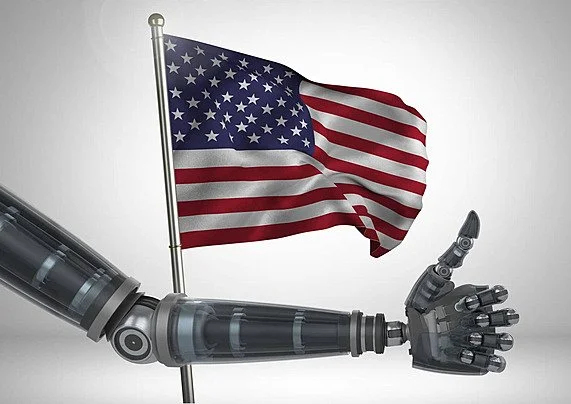
Thanks to a sweeping series of legislative actions and executive directives, the United States is witnessing an unprecedented surge of investment into industrial drones and robotics. From military modernization to rural healthcare to advanced manufacturing, capital is flowing—and fast.
This is no ordinary boom. It’s a policy-fueled investment wave that is reshaping the competitive landscape of industrial autonomy, drawing both established contractors and tech-forward startups into a high-stakes race to deliver the next generation of unmanned and autonomous systems.
The Laws That Changed the Game
Two key legislative drivers are behind the investment spike: the One Big Beautiful Bill Act (OBBBA) and a set of executive and defense procurement actions taken in mid-2025.
Signed into law on July 4, 2025, the OBBBA injects billions into robotics, unmanned systems, and AI across military, homeland security, and civil sectors. The numbers speak volumes:
$1.4 billion to scale the small unmanned aerial system (sUAS) industrial base
$2.1 billion for medium unmanned surface vessel development
$188 million for maritime robotic autonomous systems R&D
$250 million for a digital test environment for autonomy validation
Meanwhile, the “Unleashing American Drone Dominance” executive order and the Department of Defense’s 2025 procurement directive mandate federal agencies to prioritize domestically produced drones and accelerate purchasing timelines. Paired with the FY2025 National Defense Authorization Act (NDAA), which imposes tariffs and purchasing restrictions on foreign drones, these actions are reshaping demand signals in the federal procurement pipeline.
The result? A government-induced investment climate unlike any before.
Capital Follows Policy
The private sector didn’t need long to respond. From May to July 2025 alone, U.S. drone and robotics companies raised hundreds of millions in fresh capital.
Market Research Future forecasts that the Oil and Gas Asset Integrity Management Service Market is poised for steady growth, projected to expand from $16.06 billion in 2025 to $25.82 billion by 2034.
Some recent examples include Firestorm Labs, which raised $47 million in Series A funding to ramp up modular drone production for federal use. And Quantum Systems, which closed a €160 million Series C round to scale its dual-use autonomous aircraft technologies. (Shoutout to DRONELIFE for these examples.)
Big Startup Energy
Genesis AI emerged from stealth in July 2025 with a massive $105 million seed round co-led by Eclipse and Khosla Ventures. Founded just months earlier, Genesis is developing a foundational AI model for robots, aiming to automate a wide range of physical tasks—from lab work to housekeeping.
The company’s competitive edge lies in its use of synthetic training data generated through a proprietary physics engine, a method that accelerates development while reducing reliance on real-world data collection.
Kanu Gulati of Khosla Ventures noted, “It’s a big unknown: Will anybody have a large robotics foundation model that will generalize across tasks? That’s a bet we want to go after.”
Expanding Established Investments
Investment momentum isn’t limited to startups. Established players are scaling up in response to policy-driven demand for automation and sustainability. In July 2025, global ocean services provider DeepOcean announced a major expansion of its subsea robotics fleet, adding eight new remotely operated vehicles (ROVs) to its existing fleet of nearly 60.
This investment reflects growing confidence in robotics-enabled marine infrastructure as governments and industry push for more sustainable and automated operations across oil & gas, renewables, and deep sea mining sectors.
Beyond Hardware
Software innovation is also rising to meet the growing demand for high-precision, autonomous systems. In June 2025, Epic Games announced RealityScan 2.0, a major update to its popular 3D modeling platform (formerly RealityCapture), adding support for aerial lidar and AI-powered workflow enhancements.
These capabilities enable faster, more precise creation of 3D models and maps by integrating terrestrial and aerial scan data—a valuable upgrade for sectors like infrastructure, energy, and environmental monitoring. New features are poised to play a critical role in enabling more efficient, scalable deployment of robotics and drone systems.
People On the Move
The investment surge is also driving global talent moves as companies position themselves to capture new opportunities. High Performance Robotics (HPR), a subsea robotics firm, recently appointed New York-based energy executive Mitch Johnson as its new vice president to lead international expansion efforts. As HPR looks to diversify beyond the North Sea and tap into growing demand across U.S. offshore oil, gas, and wind sectors, this strategic hire reflects how policy-backed market momentum is shaping leadership and hiring decisions across the industrial autonomy space.
Government Backing
Clear demand signals from Washington are driving the money into these initiatives. The de-risking effect of federal backing is especially powerful in sectors like defense and infrastructure, where capital-intensive projects previously faced long procurement cycles and uncertain ROI.
A New Industrial Base
Beneath the surface, the legislative push is about more than short-term investments. It’s bringing a focus toward reshaping the industrial base.
With targeted funding for domestic supply chains, test environments, and rapid prototyping, the U.S. is building the infrastructure needed to support a long-term competitive advantage in autonomous systems.
For startups and non-traditional vendors, recent legislation is breaking down long-standing barriers to entry into the federal marketplace. The focus on open architectures and commercial innovation is creating new opportunities for emerging tech companies to contribute to government-funded robotics, AI, and unmanned systems programs. With fresh resources now available to accelerate R&D, testing, and deployment, the door is open wider than ever for agile firms to help shape the future of industrial autonomy.
What’s Next
As federal budget planning for 2026 moves forward, agencies are beginning to align their strategies with the new priorities outlined in recent legislation. Funding programs introduced over the past year are expected to influence how departments allocate resources, with a continued focus on automation, robotics, and AI integration across sectors like defense, infrastructure, and public safety.
For industrial drone and robotics companies, this moment represents a strategic inflection point. Those who understand the evolving policy landscape—and align their R&D, procurement readiness, and go-to-market strategies accordingly—will have the best shot at capitalizing on this rare alignment of public funding and private opportunity.
