

How to Build the Asset of the Future (Without Scrapping Your Current Plant)
/
From Manufacturing Today
We talk about the "future" like it’s a hundred years away. But if you’re managing a power plant or a refinery, the future is hitting your budget right now. Worley experts Clayton Ludik, Stephen Hillier, and Anne McPhee recently sat down to explain what a "Future-Ready" asset actually looks like.
It isn't just about shiny new buildings. It’s about turning what you already have into a connected ecosystem. If you’re tired of fighting with fragmented systems and data silos, here is how the industry is moving forward.
1. What is a "Future-Ready" asset anyway?
The experts say it isn't just about the equipment. It’s about how that equipment talks to your people. A real asset of the future has three things:
Real data: You stop using manual entry and start using automated streams.
Connections: Your people, your tools, and your processes all work together.
Speed: You can react to price changes or new rules in an instant.
It’s a move away from the "way we’ve always done it" toward a world where you actually know what’s happening on your site in real time.
2. Finding the "Value Leakers"
Before you can fix a plant, you have to know where the money is disappearing. Most industrial sites have a few big leaks.
Data Silos: The maintenance team has one set of info, and operations has another. They don't talk.
Aging Gear: You have "brownfield" sites with equipment that was never meant to be online.
Messy Tech: You're using five different platforms that don't share data.
These gaps create a fog that makes it impossible to see the true health of your assets.
3. The Brownfield Reality
Most of the work in the next decade won't be building new plants. It will be fixing the ones we have. This is "brownfield" work, and it's the immediate priority for any asset owner.
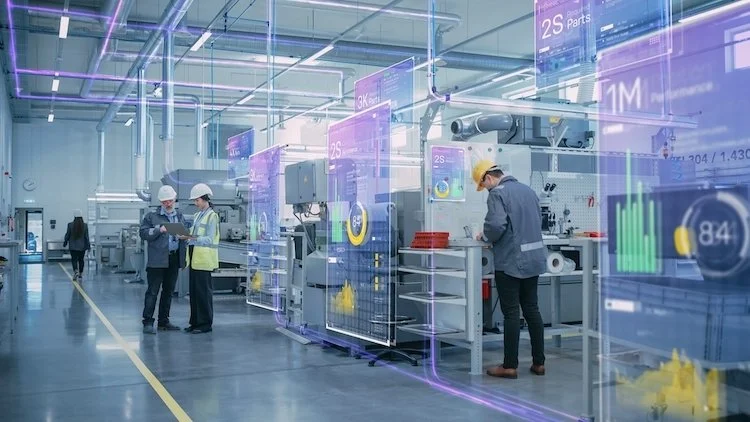
The strategy is simple: start with a roadmap. Don't buy tech just to have it. You need to retrofit sensors and connect your old data into a single source of truth. When your engineering and operations teams share the same view, the fog clears.
4. Why Digital Twins matter
Digital twins aren't just for show. When you use AI to simulate how your plant works, you can find problems before they cause a shutdown. It’s the difference between a reactive repair that costs millions and a predictive fix that keeps the lights on.
This also helps with your ESG goals. If you can optimize your energy use through a simulation, you can meet new green rules while still making a profit. It’s a win for the environment and the balance sheet.
5. It’s about people, not just code
You can have the best software in the world, but it fails if your team doesn't trust it. Technology is only half the battle. The other half is a shift in culture. You have to train staff to use these digital insights. If they don't believe the data, they won't use it, and you're back to square one.
6. Where to start
Don't try to digitize everything at once. Focus on the business value first. Where are you losing the most time? Where are the biggest safety risks? Build your digital plan around those points.
The future isn't a project with an end date. It’s a daily practice of making your assets smarter and more connected.
The EDR Takeaway: Stop waiting for a "perfect" time to modernize. Your legacy equipment is a gold mine of data if you know how to tap into it. Focus on your existing plants, break down the silos, and build a roadmap that puts your people in control.
