

Factories of the Sea: Closing the Gap for Heavy Industry
/People in land-based industry talk about "data debt" a lot. In maritime, it's even worse because the factory moves. A ship is basically a factory at sea. It's crowded, space is tight, and the main office might be 8,000 miles away from the engine room.
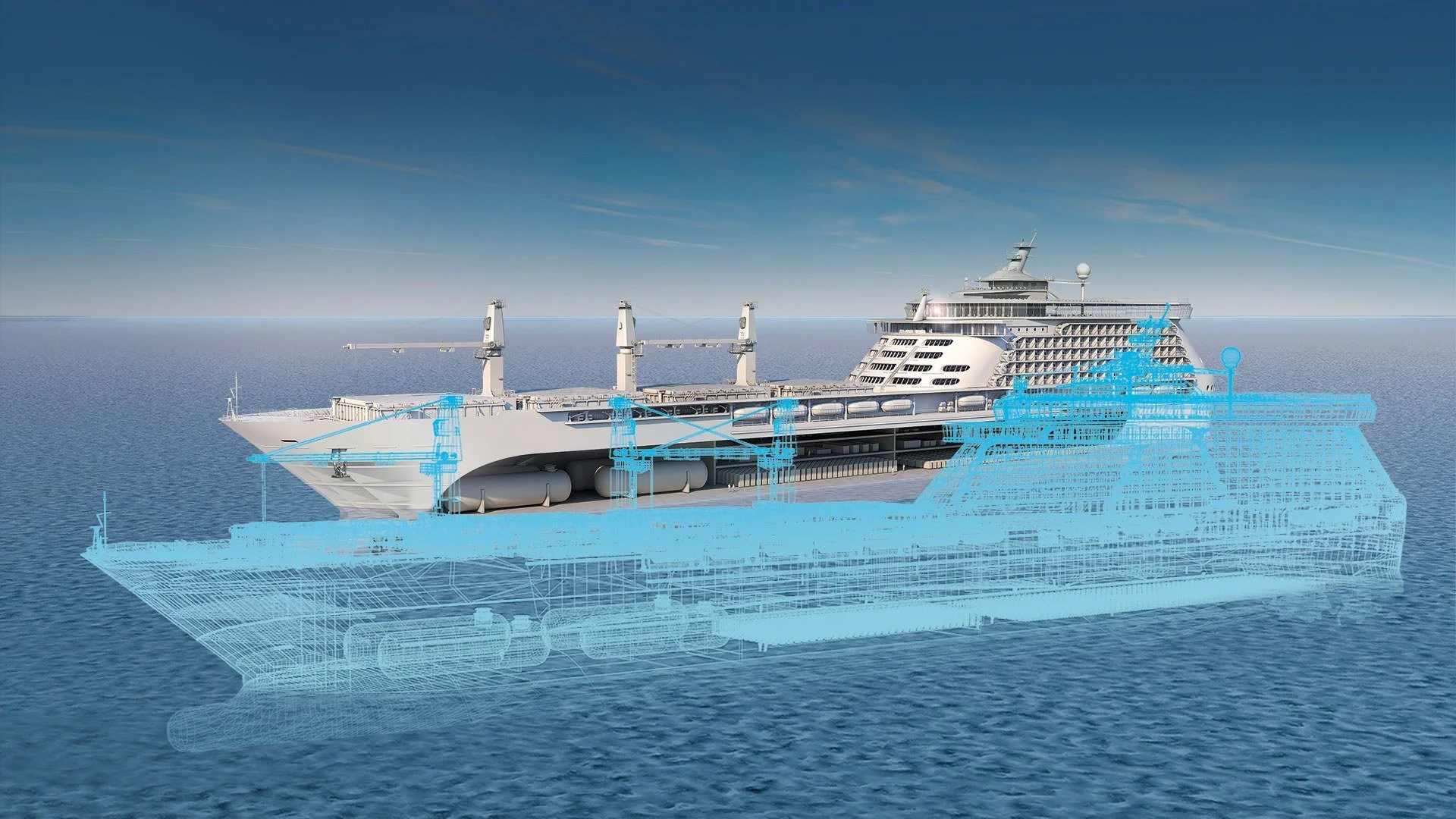
Ataris and Prevu3D recently talked about this reality. Ship managers usually look after three or four vessels at once. If one is in Singapore and you're in Glasgow, you've got a massive blind spot. Digital twins aren't just a fun idea anymore. They're a way to survive.
1. No more bad photos
For years, remote maintenance has been a bad game of "Telephone." A manager emails the ship asking for a photo of a broken valve. They get back a blurry, low-res image with a thumb over the lens. The guy taking the photo is just as stressed as the person receiving it.
The manager then has to try to remember what the space looked like a year ago. That's not engineering. It's just guessing. With a digital twin, you just double-click and you're there. You can walk through the engine room and see exactly how the pipes are laid out. It's like standing on the deck yourself.
2. Real models vs. house tours
There's a big difference between a "visual tour" and an engineering model. Many platforms offer something that looks like a house tour. It's just a bunch of 360-degree bubbles. Those look nice, but they're useless if you need to fix something.
In heavy industry, if you can’t measure it, you don't own it. The best approach uses laser scanning to build a 3D mesh. This lets you:
Get exact measurements to see if new parts will fit through a hatch.
Plan a retrofit in the digital world before anyone picks up a wrench.
Check for space issues so new systems don't hit existing pipes.
3. The "sister ship" myth
Ships are often built in batches called "sister ships." But anyone who's been at sea knows they're actually "cousins." Small changes during builds and years of different repairs mean no two ships are the same.
Relying on old drawings from 1998 is a bad move. You'll pay for that mistake during the first big repair when the drawings show a void but the reality is a wall of cables. You have to digitize the specific asset you're working on to get results you can trust.
4. Better onboarding
It's expensive to bring a new crew onto a ship. On a 300-meter vessel, it's easy to get lost. A new engineer might spend two days just learning where things are.
By using a digital twin, crews can walk from their cabin to the engine room virtually before they ever step on the boat. This builds muscle memory and keeps people safe. When they finally get there, they're ready to work on day one. It turns a messy onboarding process into a smooth handover.
5. Dealing with the Wi-Fi blackout
It's hard to get a signal at sea. You can't rely on the cloud when your ship is in the middle of the ocean. By 2026, the standard will be local access. The industry is moving toward systems that let you use the twin on the ship while syncing with the home office when you find a signal. This way, the engineer on the ship and the manager in the office are always looking at the same thing.
6. A tool for the C-Suite
Digital twins shouldn't just be a project for engineers. They're a tool for the whole company. During audits, being able to pull up a 3D model with maintenance logs and drawings is a huge win.
It makes decisions faster and cuts out a lot of travel. A manager in Glasgow can look after four ships as if they were right there on the scene.
The Nexus Takeaway: It doesn't matter if your factory is in the Midwest or the South China Sea. Distance makes everything harder. You need more than just pictures. You need a real digital anchor. Stop guessing and start measuring.
