

Siemens and the Rise of Industrial AI in Process Automation
/
From Siemens
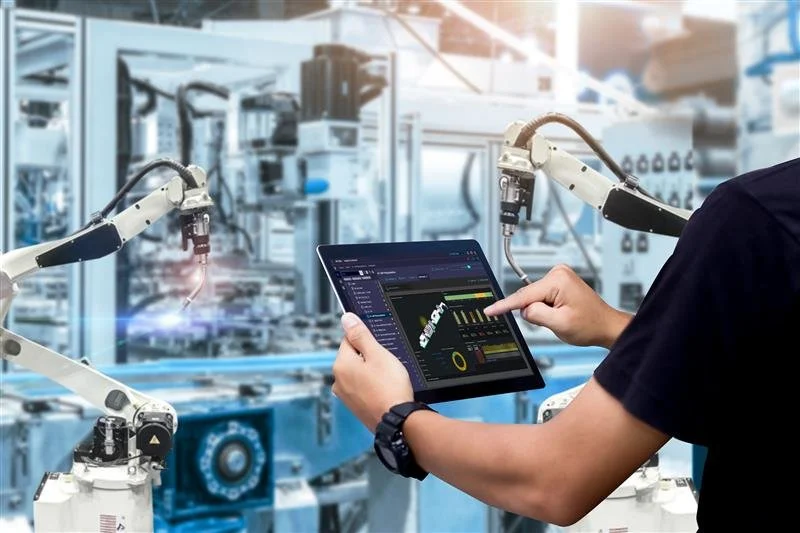
Siemens has increasingly embraced artificial intelligence (AI) as a core driver for automating, optimizing, and transforming industrial processes. From process control in factories and plants to advanced digital twins and AI agents, Siemens’ strategy shows how AI can move from “assistive” toward more autonomous, data-driven, and integrated operational models.
Key Elements of Siemens’ AI-Driven Process Automation
Several key themes emerge in how Siemens is deploying AI in process automation.
1. Advanced Process Control (APC) and Unified Platforms
Siemens offers platforms (e.g. SIMATIC APC) that integrate AI-driven control with plant operations, which help close the loop between automation and real-time operations. These platforms enable predictive control, optimization under constraints, and generally more responsive control systems.
2. Generative AI, AI Agents, and Industrial Copilots
Beyond modelling and prediction, Siemens is also introducing AI agents to assist, suggest, supervise, or partially automate decision-making. For example, the Industrial Copilot concept aims to provide generative AI-powered assistance to engineers, maintenance crews, and operators on or near the shop-floor.
3. Engineering Workflows and Digital Twins
Siemens uses digital twins to simulate, test, and optimize before deployment. Combined with AI, digital twins support what-if analyses, closed-loop optimization, and early detection of potential failures or inefficiencies. Also, engineering software and process design tools are being integrated so the loop from design to simulation to control to operation is tighter.
4. Virtual Sensors (AKA “Soft Sensors”)
When physical measurement is slow, expensive, or prone to failure, Siemens uses AI-based soft sensors to infer process parameters. These virtual sensors rely on models trained to estimate hard-to-measure variables from other, more accessible data. Siemens highlights that these soft sensors can improve measurement speed and reduce maintenance burden.
5. Software-Defined Automation and Virtual Controllers
The trend is to decouple control software from hardware so that control logic (controllers and virtual controllers) can be more flexibly deployed, updated, or tested. Siemens’ newer offerings allow for virtual controllers that can be tested in simulation and then deployed at the edge or cloud. This helps speed up deployment, improve consistency, and reduce downtime.
6. Meeting Industrial Constraints
Not all AI is equally viable in industrial settings. Siemens emphasizes that industrial AI must meet stringent requirements: robustness, reliability, real-time or near-real-time performance, secure handling of sensitive or proprietary data, ability to validate and verify models, and safety and regulatory compliance.
Siemens AI In Action
Here are a few concrete examples to illustrate how these technologies are being used:
Visual Quality Inspection: Siemens’ system enables automated defect detection in production lines. In one example, Audi used Siemens’ Industrial AI suite to standardize and optimize its shop floor operations.
Improved Packaging Speeds: Sollas Holland, a packaging machine builder known for wrapping, partnered with Siemens to build a digital twin with AI controls. The AI-enhanced controls boosted throughput from 120 to 160 boxes per minute—a 33% increase.
Water Pipeline Leak Detection: Swedish water company VA SYD is using an AI-based solution to detect leaks as small as 0.5 liters per second. By 2030 the company wants to become a climate-neutral, energy-saving water utility with zero unplanned service disruptions.
Benefits, Challenges, and What’s Next
The promise of AI in process automation is twofold: solving today’s pressing challenges while opening doors to entirely new ways of working.
Enterprises are already seeing how AI can improve efficiency, reduce downtime, and enhance decision-making. But hurdles like data quality, system integration, and workforce readiness still stand in the way.
Looking ahead, the question isn’t just what AI can do now, but how these technologies will evolve to reshape the very foundations of industrial operations.
Benefits
Increased Speed and Flexibility: Faster detection of anomalies and faster inference reduce bottlenecks
Cost Savings: Less reliance on physical sensors or less maintenance can help reduce downtime
Improved Quality and Yield: AI‐driven control and prediction help avoid off-spec product and improve consistency
Empowerment of Personnel: Copilots and agents can assist less experienced workers, freeing human experts to focus on novel tasks
Operational Resilience: Better simulation and what-if optimizations provide the ability to adapt more quickly to changing inputs or disruptions
Challenges
Data and Model Validation: Ensuring AI models are accurate, safe, and reliable, especially in safety-critical or regulated industries
Integration of IT and OT: Bridging the gap between traditional operational technology and information technology
Cultural and Skills Barriers: Engineers and operators must trust and understand AI tools, and organizations will have to retrain staff or hire for new skills
Data Privacy and IP: Particularly a focus for industrial foundation models or when using customer-data in training
Hardware and Real-Time Requirements: AI computations may need to run on the edge with low latency
Future Trends
Industrial Foundation Models (IFMs): Large, broadly trained models—combining public data with anonymized internal data—will increasingly be adapted or fine-tuned for specific facilities
Self-Optimizing Plants: Moving toward systems that not only report or correct deviations, but anticipate and optimize processes end-to-end with minimal human intervention
More Generative, More Agentic Tools: Tools that can propose new process configurations, suggest design changes, simulate multiple alternatives, and help steer operations proactively
Tighter Digital-Physical Integration: Use of digital twins, continuous simulation, and real-time feedback loops between model and physical systems
Edge and On-premises Deployment: For performance, security, and latency reasons, more AI will reside at the edge of the network, even if training or heavy simulation happens in cloud or hybrid environments
Positioning and Strategy
Siemens’ approach shows a layered strategy: not just providing individual tools, but also building platforms, workflows, and value chains that can embed AI into the lifecycle of industrial plants. For example:
SIMATIC and other Siemens platforms are evolving toward more cloud/hybrid and software-defined automation
Their industrial AI offering emphasizes democratization of AI while keeping industrial constraints in view
The company is pushing forward with partnerships (for example, with NVIDIA) to ensure the hardware can support real-time, AI-enabled workflows
Final Thoughts on Siemens Process Automation AI
Siemens is pushing aggressively into embedding AI into process automation—not as a bolt-on, but as a core part of the control, design, and operations lifecycle. AI-based soft sensors, digital twins, AI agents and copilots, and software-defined automation are giving their industrial customers faster, more efficient, and more resilient operations.
The journey from today’s mostly assisted decision support to more autonomous, optimized, reliable industrial systems is well underway. But the transition does come with non-trivial challenges, especially around safety, model trust, integration, and change management.
