

The Great Drone Freeze: Why the FCC Just Put Your Fleet in the Cooler
/If you were hoping for a quiet start to 2026, the Federal Communications Commission (FCC) has other plans. On December 22, 2024, while most of the industry was checking transformer loads, planning STOs or icing its eggnog, the FCC dropped a regulatory coal brick down the sector's chimney.
In a move that caught even the most cynical lobbyists off guard, the FCC officially added all foreign-made uncrewed aircraft systems (UAS) and their critical components to its "Covered List." For those not fluent in D.C. alphabet soup, the Covered List is the government’s "do not fly" list for hardware deemed an unacceptable risk to national security.
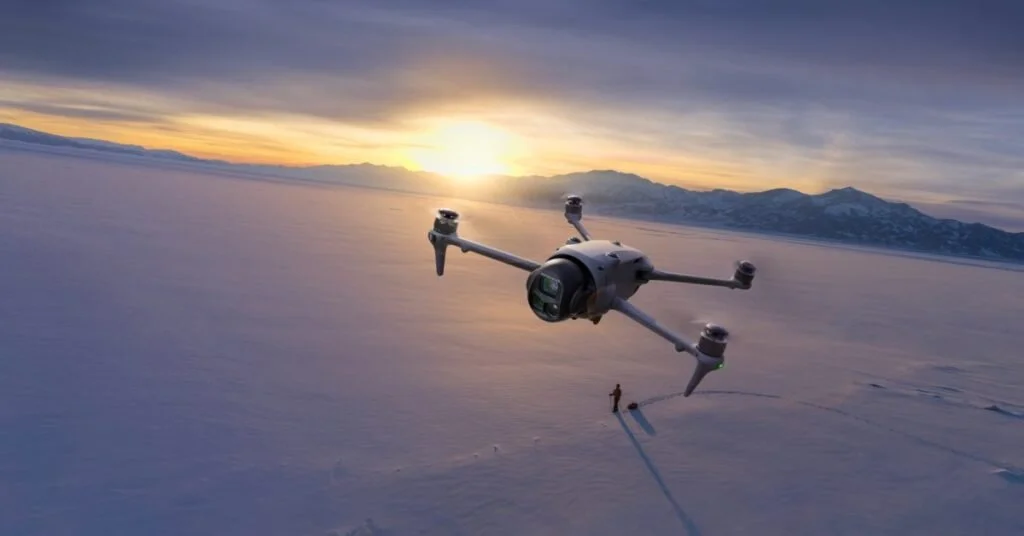
DJI Aircraft in flight From Imaging Resource
For the energy and utility sector—a group that has spent the last five years building massive inspection programs around DJI and Autel platforms—the ground just shifted. Hard.
This Isn’t Just a "China Ban" Anymore
For years, the talk of the town was the "Countering CCP Drones Act." We all expected DJI and Autel to be the primary targets. And they were: the FCC specifically cited Section 1709 of the FY2025 National Defense Authorization Act (NDAA) to blackball those two giants.
But here’s the kicker: the ruling is "producer-agnostic." This means it’s not just about where the company’s headquarters are; it’s about where the plastic meets the silicon. The FCC has effectively implemented a categorical freeze on any UAS or critical component produced in a foreign country. If it wasn't made in the U.S.A., it's now on the list.
The "Critical Component" Creep
This is where things get slightly surreal for the engineers in the room. The FCC’s jurisdiction is generally limited to things that go beep and boop—radio frequencies and communications. However, the new "critical components" list is shockingly broad. It includes:
The Obvious: Flight controllers, data transmission devices, and ground stations.
The "Wait, What?": Sensors, cameras, and—most controversially—motors and batteries.
The industry is currently scratching its head asking how the FCC has the legal authority to regulate a lithium-ion battery or a brushless motor, which (last we checked) don't transmit radio signals. But for now, the rule stands: if your new drone’s motor was wound in a foreign factory, it is technically ineligible for new FCC authorization.
What This Means for Your Existing Fleet
Before you start grounding your Matrice 300s or your Autel EVO IIs, take a breath.
The silver lining: This is not a retroactive ban. If your drone already has an FCC authorization (which it does if you’re currently flying it legally), you can keep using it. You can even buy existing inventory of previously authorized models.
The "freeze" applies to new authorizations. That means when a foreign manufacturer tries to launch a "Version 2.0" next month, it won't get the FCC seal of approval required for import or sale in the U.S. market. We are effectively living in a hardware time capsule; the tech you have today is the tech you're stuck with for the foreseeable future.
The Energy Sector Impact: A Strategy Shift
For utility managers, the "wait and see" approach just became a "run and diversify" strategy. Here is the B2B reality:
Procurement Panic…Loading: If you have a budget allocated for a fleet expansion in 2026, buy your "legacy" foreign drones now while authorized inventory still exists. Once that stock is gone, it isn't coming back. BUT…it also might be time to take the POC data you have been gathering on other UAV platforms and start scaling.
The American Onshoring Push: This ruling is designed to force the industry toward "Blue UAS" and domestic manufacturers. The problem? Scaling domestic production to meet the demands of the entire U.S. utility grid is like trying to charge a Tesla with a AA battery. It will take years for domestic supply chains to match the price and performance we've grown used to. Some of the OEMs are farther along in their scale-ups, so shop carefully.
Waiver Warfare: The Department of Defense (recently referred to in some circles as the "Department of War") and DHS have the power to grant "specific determinations" for certain hardware. Expect a cottage industry of lawyers and consultants to emerge overnight, promising to help you navigate these exceptions for "critical infrastructure" needs.
The Bottom Line
The FCC is citing the 2026 World Cup and 2028 Olympics as the catalyst for this "airspace sovereignty" push. They’re worried about data exfiltration and "remote disabling" of drones over sensitive sites.
Whether you think this is a necessary shield for our national grid or just a massive headache for your O&M budget, the era of "cheap and easy" drone procurement is over. It’s time to start looking at your supply chain as closely as you look at your inspection reports.
Want to see the latest options for drone hardware specifically for energy companies AND talk with 2,000 fellow UAV program leaders to benchmark your strategies? Be sure to attend the 10th Anniversary Energy Drone & Robotics Summit, June 22-24 in Houston!
