

Top 5 Drone Use Cases Transforming Utilities
/As electricity demand surges, grids age, and extreme weather increases pressure on reliability, utilities are turning to drones to inspect assets faster, operate more safely, and make better maintenance decisions.
From centralized autonomous inspections to AI-powered edge analytics and drone-in-a-box systems, these five real-world use cases show how utilities are scaling drone programs effectively—and why drones are essential to grid resilience and modernization.
Like use cases? After this article, read last week’s roundup of O&G drone use cases.
1. National Grid: Centralized Autonomous Drone Inspections
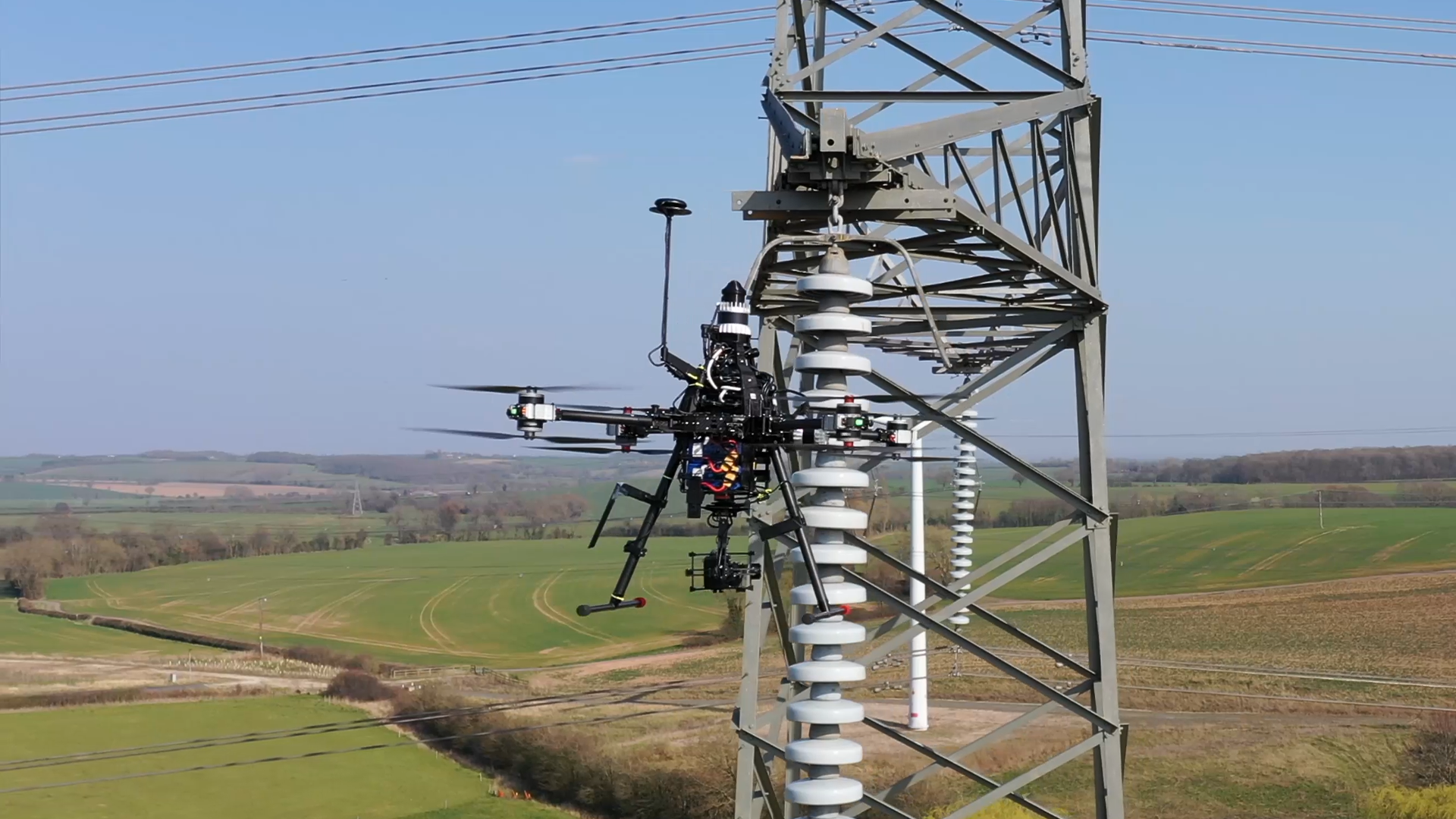
From national Grid
National Grid has launched one of the world’s first centralized, autonomous drone inspection programs for high-voltage electricity infrastructure. Using sees.ai’s technology and beyond visual line of sight (BVLOS) drones operated from a central control room, the utility inspects transmission towers and conductors across England and Wales without putting crews or helicopter pilots at risk.
The autonomous drones collect close-range, high-quality visual data that feeds directly into National Grid’s maintenance decisions and long-term investment planning. By automating routine inspections, the program reduces environmental impact, lowers costs, and allows skilled lineworkers to focus on complex, hands-on tasks that require human expertise.
2. Southern Company: Uncrewed Helicopters and AI Asset Management
Southern Company is taking a different approach to long-distance grid monitoring by deploying SwissDrones helicopter-style UAVs, which can handle heavy payloads and extended flights. The utility can now fly repeatable, guided missions that generate identical datasets on every pass.
Those consistent datasets unlock powerful AI-driven analysis backed by gNext, which allows Southern Company to detect subtle changes that would be nearly impossible to spot with the naked eye. The result is earlier intervention, optimized maintenance schedules, and improved system reliability across a massive service territory.
3. Exelon and Baltimore Gas and Electric (BGE): AI-Powered Edge Inspections
Exelon and BGE are redefining what’s possible with AI-powered drone inspections by pushing intelligence directly to the edge. In partnership with Deloitte and NVIDIA, the utility deployed autonomous drones equipped with real-time computer vision and edge computing modules.
Instead of manually sorting thousands of inspection images, defects are detected and prioritized in real time during flight. Other benefits—all of which contribute to improving safety and reducing outages—include:
Inspection planning time dropped from an hour to seconds
Manual photo review was eliminated
Crews get faster, clearer insight into asset conditions
4. Duke Robotics: Insulator Cleaning (IC) Drones
Insulator contamination is a persistent challenge for utilities, often requiring dangerous and time-consuming manual cleaning or outages. Duke Robotics’ Insulator Cleaning (IC) Drone offers a safer alternative—allowing utilities to clean and inspect high-voltage insulators using an aerial robotic system.
The IC Drone reduces the need for human exposure to energized equipment, improves cleaning consistency, and supports grid resilience efforts aligned with national infrastructure priorities. With a focus on NDAA-compliant platforms and secure deployment, the technology is being prepared for broader U.S. utility adoption.
5. FPL: Drone-in-a-Box and AI Monitoring
Florida Power & Light (FPL) flies hundreds of drone assessments every day across its service area. A cornerstone of its drone program is drone-in-a-box technology—autonomous systems that launch, inspect, return, recharge, and upload data without human intervention.
Equipped with thermal imaging, FPL’s drones identify heat anomalies before outages occur, enabling proactive maintenance. The expansive, highly autonomous drone program allows FPL to respond faster to issues and maintain reliability across a massive and weather-exposed service area.
What These Utility Drone Use Cases Have in Common
What stands out across these five use cases isn’t the technology itself—it’s the deliberate application by a variety of utilities.
National Grid centralized operations to scale inspections safely.
Southern Company focused on repeatable data to unlock AI-driven asset intelligence.
Exelon/BGE pushed analytics to the edge to eliminate delays between inspection and decision-making.
Duke Robotics is enabling drones to take on physical maintenance tasks, not just observation.
FPL embedded autonomy into daily operations with drone-in-a-box systems.
In each case, drones are helping with specific operational goals like reducing risk, improving data quality, accelerating response times, or extending the life of critical assets. These programs offer a practical look at how drones, autonomy, and AI can be integrated into existing workflows to solve real problems at scale. And the general result is more resilient grid operations.
