

The Infrastructure Debt Collector: Scaling Asset Integrity for the Energy Old Guard
/
From Creaform3D
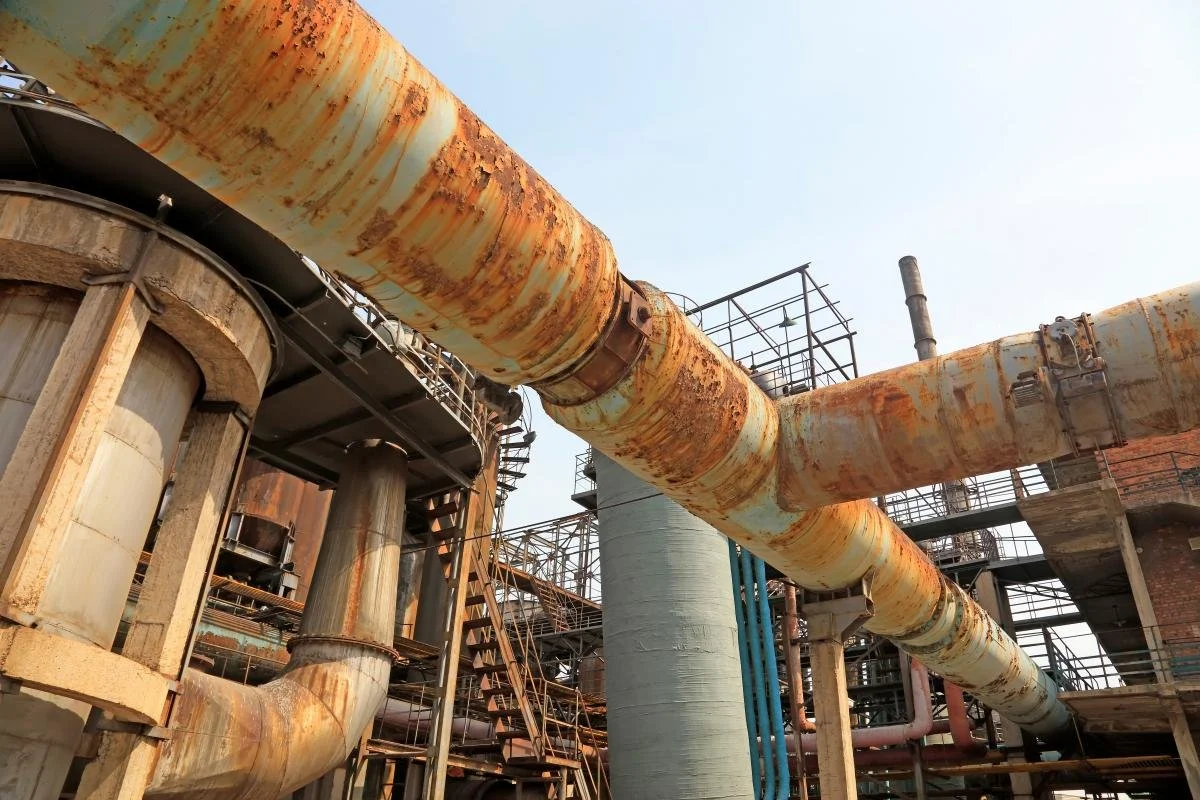
Our energy infrastructure isn’t just "aging"—it’s practically antique. We are operating in an era where vintage substations are held together by legacy engineering and a prayer, while power plants and refineries built during the era of rotary phones are being asked to meet the digital demands of 2026. This isn't just an operational challenge; it is an era of unprecedented Data Debt.
For the utilities, power generators, and oil & gas (O&G) operators keeping the lights on, the bill is coming due. As assets drift further from their original design life under increasing environmental stress and heavier loads, inspection has shifted from a periodic "check-the-box" activity to a recurring, high-stakes operational requirement.
The problem? Inspection demand has officially outpaced human capacity. We have hit the ceiling of what manual workflows and "boots-on-the-ground" can achieve. In this week’s feature, we explore how the industry is moving beyond the "one-off" drone flight toward a model of Institutional Reliability.
1. The Collision: Antique Assets vs. Fixed Human Capacity
The math of the energy sector is currently broken. Four in ten major industrial roads are below "good" condition, and nearly half of the nation's bridges—many of which carry critical pipelines or support grid infrastructure—are classified as fair or worse. But while the assets are degrading, the pool of certified inspectors and skilled pilots remains a fixed constraint.
As we scale the frequency of inspections to manage the risk of aging turbines, cooling towers, and midstream terminals, we hit a wall. We are expecting a shrinking workforce to produce more complex, more rigorous, and more defensible records than ever before. If your strategy for a multi-billion dollar refinery or a sprawling transmission network still relies on a pilot’s individual skill to recreate the same flight path year after year, you aren't building a record—you're creating a digital scrapbook of rusting assets.
2. The High Cost of "Data Drift"
In the high-stakes world of asset integrity, consistency is the only currency that matters. To support spatial analysis, change detection, and long-term planning, data must align perfectly across inspection cycles.
In many manual programs, "Data Drift" is a silent killer. If Pilot A flies a flare stack in 2024 with a specific Ground Sampling Distance (GSD) and Pilot B flies it in 2025 with slightly different overlaps or camera angles, the resulting 3D models won't align. For a reliability engineer trying to determine if a crack in a pressure vessel has grown by three millimeters or if the camera was just closer this time, this inconsistency is catastrophic. You end up wasting hundreds of engineering hours trying to distinguish between real asset change and variation introduced during data collection.
3. The Vertical Reality: Complexity in the Energy Sector
Unlike inspecting a flat highway, energy assets are vertical, complex, and spatially constrained. Inside a high-voltage substation or an O&G processing plant, the environment is actively hostile to traditional drone flight.
Steel interference and shielding mean that GPS (GNSS) availability is often limited or unreliable. Manually flying a drone around live energized equipment or pressurized flare tips under these conditions places an immense burden on the operator. As complexity increases, so does the probability of "ad-hoc" piloting choices—meaning the data captured this year will look nothing like the data captured next year.
This is where the workflow must evolve. Data integrity doesn't start in the analysis software; it starts at the point of acquisition.
4. The Autonomy Multiplier: Stantec, gNext, and Skydio
From Stantec
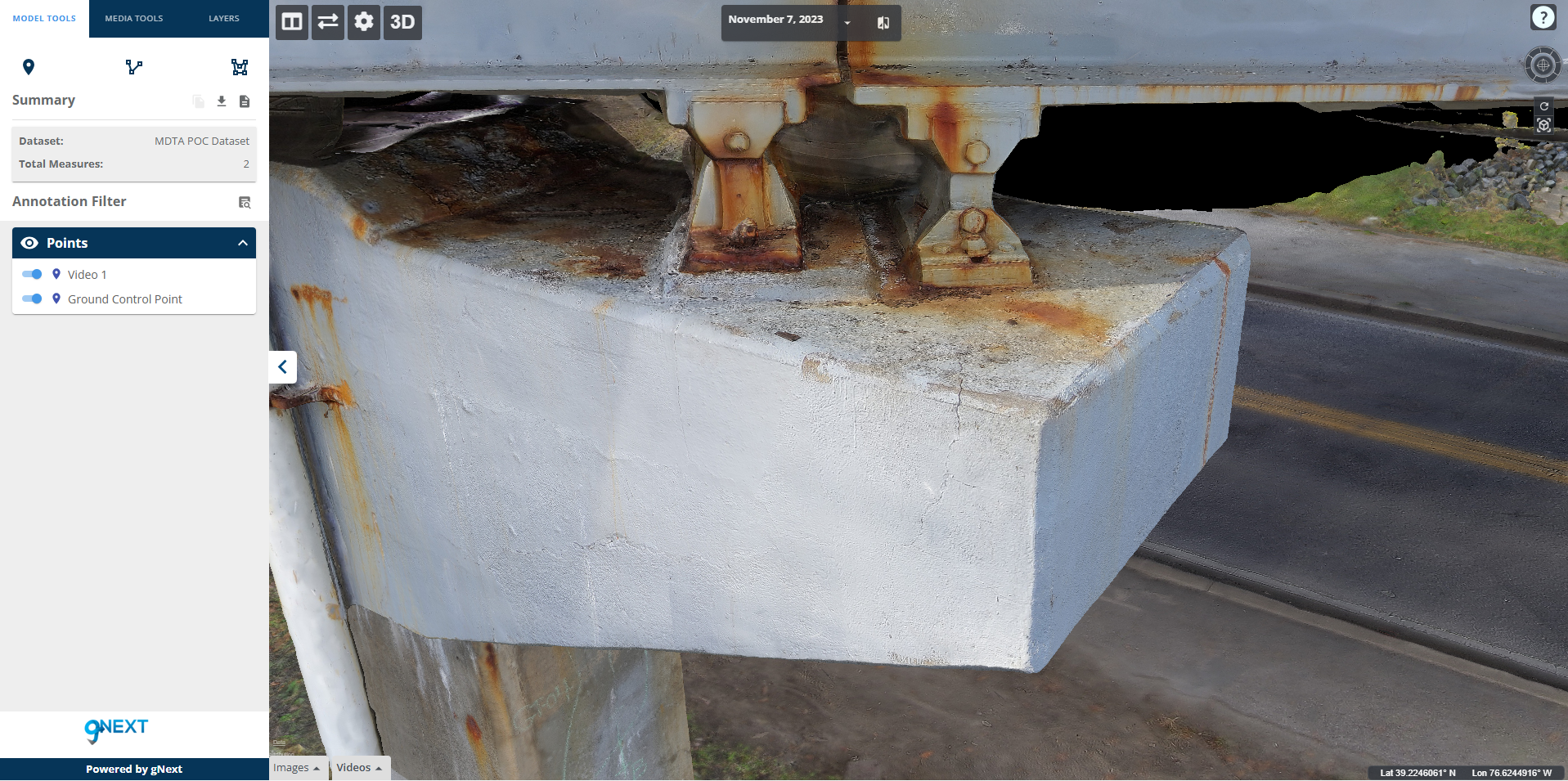
The shift currently being pioneered by firms like Stantec in partnership with gNext and Skydio represents a fundamental change in how we view drone operations. They are moving from "reliable digital capture" (which still relies on a person's steady hand) to Standardized, Autonomous Photogrammetry.
In this context, autonomy is not about convenience or "cool factor." It is about Control. By leveraging autonomous flight systems that can navigate GNSS-limited environments, operators can lock in engineering requirements:
Repeatability by Design: Missions are flown to defined requirements—Target GSD, overlap, and coverage—rather than a pilot's intuition.
Institutional Memory: The flight path is digitized and repeatable, ensuring that three years from now, the system captures the exact same pixels from the exact same angles.
Operational Focus: Field crews can stop worrying about flight mechanics and start focusing on safety and the environment.
5. Turning Missions into Institutional Reliability
The "pioneer" phase of drone inspections is over. We no longer need stories about "mission success" where a pilot "got the shots." We need Institutional Reliability. Leading programs are shifting their focus to producing comparable, defensible datasets year after year, independent of who is holding the controller or where the asset is located. For a Power Generator, this means having the confidence to track the degradation of a cooling tower over a five-year period. For a Grid Operator, it’s about monitoring pole-top hardware across a 2,000-mile network with surgical precision. For O&G, it’s about having a defensible record of external corrosion that can stand up to a regulatory audit.
6. Downstream Dividends: Better GIS and Digital Twins
The value of standardized capture extends far beyond the flight. Predictable, high-quality inputs make photogrammetry outputs significantly easier to integrate into Enterprise GIS, digital twins, and asset management systems.
When the input data is consistent, "Change Detection" algorithms actually work. Instead of flagging false positives caused by different lighting or angles, the AI can focus on actual material degradation. This turns raw visual intelligence into operational intelligence, allowing decision-makers to act with speed and precision rather than second-guessing the data.
7. The Mandate for the Energy Old Guard
If you are an asset owner in the energy space, the mandate for 2026 is clear: Stop flying missions and start building a legacy of data. The transition to autonomous, photogrammetry-driven acquisition is a core capability for meeting the infrastructure crisis. The reasons are purely pragmatic:
Manage the Risk: Autonomy reduces the "human error" variable in high-stakes environments.
Optimize the Resource: Let your engineers engineer, rather than wasting time organizing inconsistent, messy datasets.
Scale the Capacity: Autonomous and remote (docked) operations are the only way to meet the rising frequency of inspection demands without scaling your headcount at a 1:1 ratio.
The Big Takeaway: Aging infrastructure is the debt collector that is finally knocking on our door. We cannot inspect our way out of this crisis using the manual, fragmented workflows of the last decade. The only path forward for the Energy Old Guard is to automate the capture, standardize the output, and build a record that we can actually trust for the next fifty years.
Don't just capture it. Control it.
Robotics inspection, maintenance, and repair take center stage at the Energy Drone & Robotics Summit, where real case studies, proven tech, and field-tested best practices come together under one roof. If this topic matters to your operations, that’s where you want to be. Register now and be part of the conversation driving what actually works in the field.

