

The Real-World Future of Machines: Navigating the Physical AI Inflection Point
/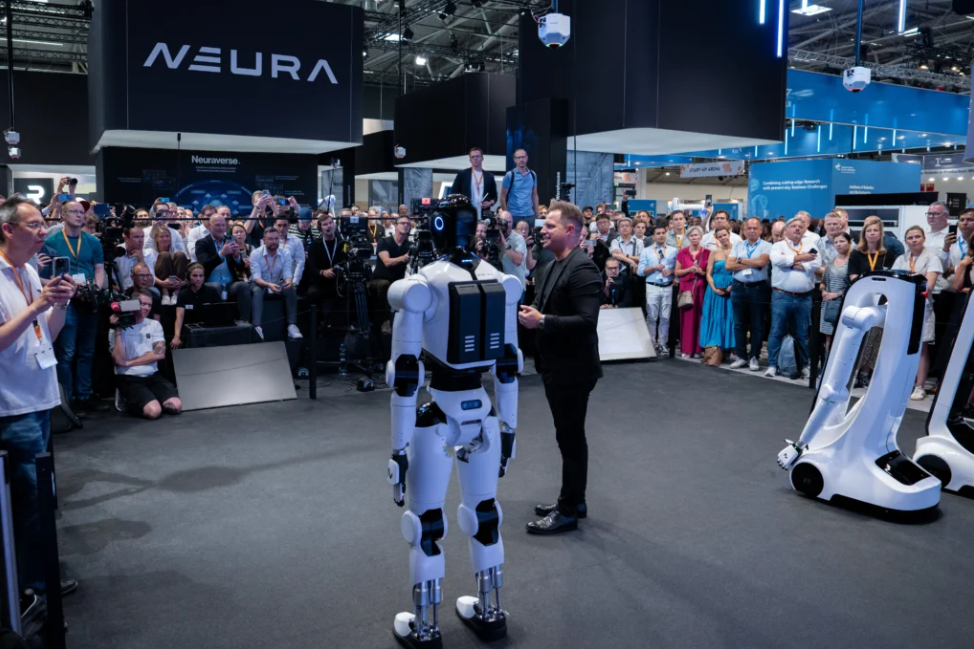
From neura robotics
The "honeymoon phase" of robotics is officially over. At CES 2026, the spotlight was stolen by humanoid platforms like NEURA Robotics’ 4NE1, but for the 20,000 members of the Energy Drone and Robotics Coalition (EDRC), the conversation has shifted. We are no longer asking if a robot can walk; we are asking if it can survive a "link-loss" scenario in a nuclear facility or tighten a bolt with the tactile precision of a human hand.
As we move into 2026, the industry is witnessing a "Physical AI" inflection point—the convergence of vision-language-action (VLA) models, edge computing, and tactile sensing. Here is how the transition from prototype to production is actually happening.
Last week, we were able to discuss these key issues at the Autonomy Global Full Crew Roundtable on Robotics, with industry experts; Host AG AMB for Europe, Joanna Wieczorek, Sean Guerre (Energy Drone and Robotics Coalition (EDRC) Managing Director), Kimberly McGuire (Robotics Engineer) and Alexander Schmitz (XELA Robotics CEO and co-founder).
1. The Safety Business Case: Reducing Injuries by 50%
In hazardous industries—Oil & Gas, Mining, Nuclear, and Utilities—the primary driver for robotics has never been "cool factor." It is, and has always been, Safety. Major players like Shell, Chevron, ExxonMobil, and Duke Energy are already deploying aerial and ground systems to keep humans out of confined spaces and high-risk environments.
A recent McKinsey Global study projects that by 2030, the combination of AI and robotics in construction and heavy industry could prevent up to one million workplace injuries annually. This isn't just about saving lives; it's about the bottom line. Reducing workplace injuries by 50% creates a ROI that even the most skeptical CFO can’t ignore.
2. The "Just Enough" Robot: Hype vs. Utility
The "Godfather of Modern Robotics," Rodney Brooks, has issued a warning that the field has lost its way by over-rotating toward general-purpose humanoids. In most industrial settings, a humanoid form factor is an expensive liability.
The Insider reality check:
Form Factor: Often, a mobile base on wheels is superior to a walking robot for indoor logistics where floors are flat and predictable.
Complexity: Customers are routinely choosing simple, reliable grippers over sophisticated five-fingered humanoid hands. Why? Because they are cheaper, more reliable, and "good enough" for the task at hand.
The Tactile Frontier: While vision has dominated the last decade, companies like XELA Robotics are proving that the real frontier is Touch. Tactile sensing allows robots to handle delicate tasks like cable insertion, bolt-tightening, and even medical palpation to find tumors—tasks where vision alone fails.
3. The Connectivity Crisis: "What Happens When the Wi-Fi Dies?"
A critical safety concern raised by robotics engineers in 2026 is the over-reliance on cloud-based AI. In aviation, there are strict protocols for what a drone must do during GPS or link loss.
However, as robots move into homes and public spaces, these fail-safe behaviors are still being debated. A humanoid robot cannot simply "spin like a Roomba" when it loses connectivity, especially when operating around children, pets, or fragile industrial equipment. The shift toward onboard edge computing (processing AI locally on the robot) is now a non-negotiable requirement for any system performing safety-critical tasks.
4. The Human-in-the-Loop Training Model
The "brains" of these new physical AI systems are being trained through Imitation Learning. By capturing footage of humans performing tasks, developers map those motions onto robotic platforms.
Interestingly, because human morphology (five fingers, two arms) is the gold standard for dexterity, some companies are now putting human trainers into robot-constrained "grippers" to generate training data that more accurately reflects the robot's physical limits. This "Middle Path" ensures that even if the robot isn't a full humanoid, it can still leverage human-like dexterity in its specific tasks.
5. Industrial vs. Consumer: The Usability Mountain
While a lawyer might find setting up a floor-cleaning robot a "nightmare," the industrial sector has mastered the centralized governance model (see our previous coverage of Ameren).
For consumer markets—especially elder care and household maintenance—the "Physical AI" must be "super easy to use." The industry is moving toward complete solutions where the hardware and software are bundled into a plug-and-play experience. If a machine requires a PhD to operate, it will never scale beyond the factory floor.
6. The Mandate for Asset Owners
As we move through 2026, the mandate for industrial leaders is clear:
Focus on Problems, Not Hype: Avoid the "CES Trap." Invest in companies solving specific physical interactions (tactile sensing, exoskeleton support) rather than those selling a "general-purpose" dream.
Prioritize Edge over Cloud: Ensure your robotics fleet has enough onboard intelligence to fail safely during a network blackout.
Build Around Humans: Robots are absorbing the "physical punishment" of the job so your human workers can focus on higher-skilled roles. Frame your deployments as "safety upgrades," not "staff reductions."
The Insider Takeaway: Technology for technology’s sake is a luxury we can no longer afford. Whether it’s an offshore wind farm, nuclear facility or a petrochemical plant, the next decade will be won by the "Just Enough" robots—machines that do one thing with 100% reliability rather than ten things with 60% uncertainty.
Check out the full roundtable discussion - Autonomy Global Full Crew Roundtable on Robotics
