

Transforming Grid Inspections: How Utilities Are Using AI to Improve Reliability and Asset Management
/Artificial intelligence (AI) has become one of the most talked-about technologies in utility asset management. For many electric utilities, the challenge has been building the data, workflows, and organizational support needed to make AI useful.
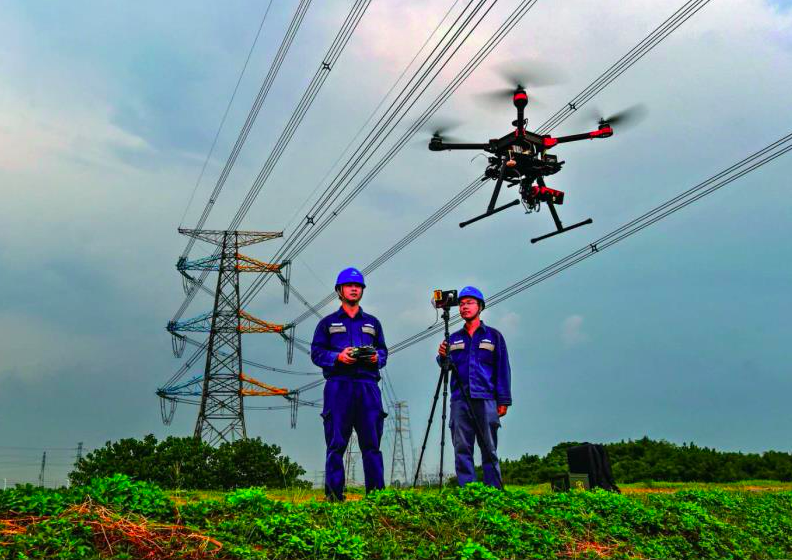
From DJI Enterprise
That theme was front and center during the "Transforming Grid Inspections: Using AI to Improve Reliability and Asset Management" session at the 2026 Energy Drone & Robotics Summit, part of InnovateEnergy Week.
Moderated by Brandon Bozarth of Buzz Solutions, the panel brought together utility leaders representing organizations at very different stages of their modernization journeys:
Slade Bridges of Southern Company
Grant Pence of Duquesne Light
Garrett Scott of Duke Energy
Rather than presenting AI as a silver bullet, the discussion focused on the practical realities of modernizing inspection programs, including workforce challenges and GIS integration as well as organizational change management and increasingly autonomous inspections.
Modernization Begins with Solving Different Problems
Although every utility represented on the panel is working toward more intelligent inspections, each organization arrived there for different reasons.
For Southern Company, the challenge was helping the rest of the organization understand what drones could accomplish.
"The field doesn't really know what can be done. We have to show them," Bridges said. "The obstacle has been trying to show them that this is a worthwhile platform."
Duquesne Light's journey was driven by an entirely different concern: preserving institutional knowledge as experienced employees retire.
"Our aging workforce throughout the company is starting to retire," Pence explained. "We wanted to try to find a way to keep the level of inspections as high as they were, but not have such a long training curve."
Early testing has already shown him the value of AI-assisted inspections. "There are things that I'm catching that it doesn't catch," Pence said. "But there's a lot of stuff that it catches that I didn't even notice while we were taking the pictures."
The Biggest Opportunity Isn't AI Alone
Throughout the discussion, one message surfaced repeatedly: AI only delivers value if the surrounding workflow is ready for it.
Bridges said Southern Company has focused first on making inspection results actionable. Rather than handing engineers thousands of images, his team delivers reports that combine drone photos, GIS maps, coordinates, field notes, and repair information into a format crews can immediately use.
"I think that's one of the keys," Bridges said. "Making the data actionable to the field. You have to meet them where they are."
Bozarth noted that research Buzz Solutions completed with EPRI [the Electric Power Research Institute] reached a similar conclusion. "While the AI was great and was certainly helpful," he said, "a lot of the low-hanging fruit to gain efficiencies was actually in the automation of the process from data capture, managing the imagery, matching that to GIS data, being able to report on that and take action."
Bridges agreed that AI comes after those foundational improvements. "I think it's just baby steps," he said. "You've got to walk before you can run."
Better Inspections Mean Finding More Problems
One of the most candid conversations centered on an unintended consequence of improved inspections. As drones and AI identify more asset issues, utilities must also be prepared to repair them.
"We're seeing so much of this stuff that now we have to try to come up with the funding to actually repair it," Pence said. "Once we identify the issues, now we have to have the funds to repair it."
That challenge isn't unique to Duquesne Light. Scott acknowledged that Duke Energy has faced similar questions as inspection programs mature. "We have a duty to identify where we have problems," he said. "I think each company's going to navigate it differently. Where Duke ended up with that is: What's the right thing to do for our customers?"
Winning People Over
Technology itself hasn't proven to be the largest barrier to modernization. Instead, panelists repeatedly pointed to education and organizational change management.
Bridges admitted he expected experienced field personnel to resist drones. Instead, many quickly became advocates once they saw the results. "I can remember unboxing a Wingtra and having a foreman say, 'Well, that's just a nice little toy you have there,'" Bridges recalled. "Once they see the value... now we're inundated with requests."
Pence described an almost opposite experience. "The people in the office were hesitant to change because they were scared of the repercussions," he said. "The guys in the field, they really like it because they're getting better information right up front."
Scott said education continues to be one of Duke Energy's biggest responsibilities despite operating drones for nearly a decade. He said:
"You would've thought that we would've gotten to a season where everybody understands what drones are, what they can do, and how we use them. That's the farthest thing from the truth because we're still educating, teaching. There's just a lot of misinformation still on what's possible and where we're currently at.”
Continuing Toward Autonomous Inspections
When asked where utility inspections could be in five years, all three panelists described increasingly autonomous operations powered by drone docks, AI, and automated workflows.
Bridges believes automation will steadily expand as AI becomes better at recognizing equipment conditions. "I think once AI starts understanding what a broken conductor looks like, a broken insulator looks like, you're going to see the floodgates open up."
Pence envisions combining permanently deployed docking stations with traditional drone pilots, using automation where it makes sense while maintaining flexibility for more complex inspections.
Scott painted perhaps the boldest vision. "My hope in five years would be we've kind of put our department out of business," he said, explaining that today's drone pilot roles could evolve into system managers overseeing fleets of autonomous aircraft.
He continued, “It'd be really cool to get to a point where we have an outage alert, a drone automatically launches, it knows exactly what pictures to take, it analyzes the pictures, and that information goes directly to the consumer with no human processing."
AI’s Role in a Smarter Grid
Bozarth closed the discussion by encouraging attendees to think beyond AI as simply another inspection tool.
As utilities collect larger volumes of imagery and operational data, AI will enable organizations to ask questions that previously would have been nearly impossible to answer across an entire transmission or distribution network.
But throughout the conversation, the panelists consistently returned to a more immediate lesson. The utilities making the greatest progress are investing in better data, stronger workflows, organizational education, and processes that allow AI to deliver meaningful operational value.
As Bridges summarized earlier in the discussion, successful modernization comes one step at a time. "You've got to walk before you can run."
Watch this recording and more now! (Included for FREE if you were a VIP attendee at IE Week, simply reach out for the link!)
