

Washington Targets Foreign Robots and Drones With New Restrictions and Tariffs
/
From Global News
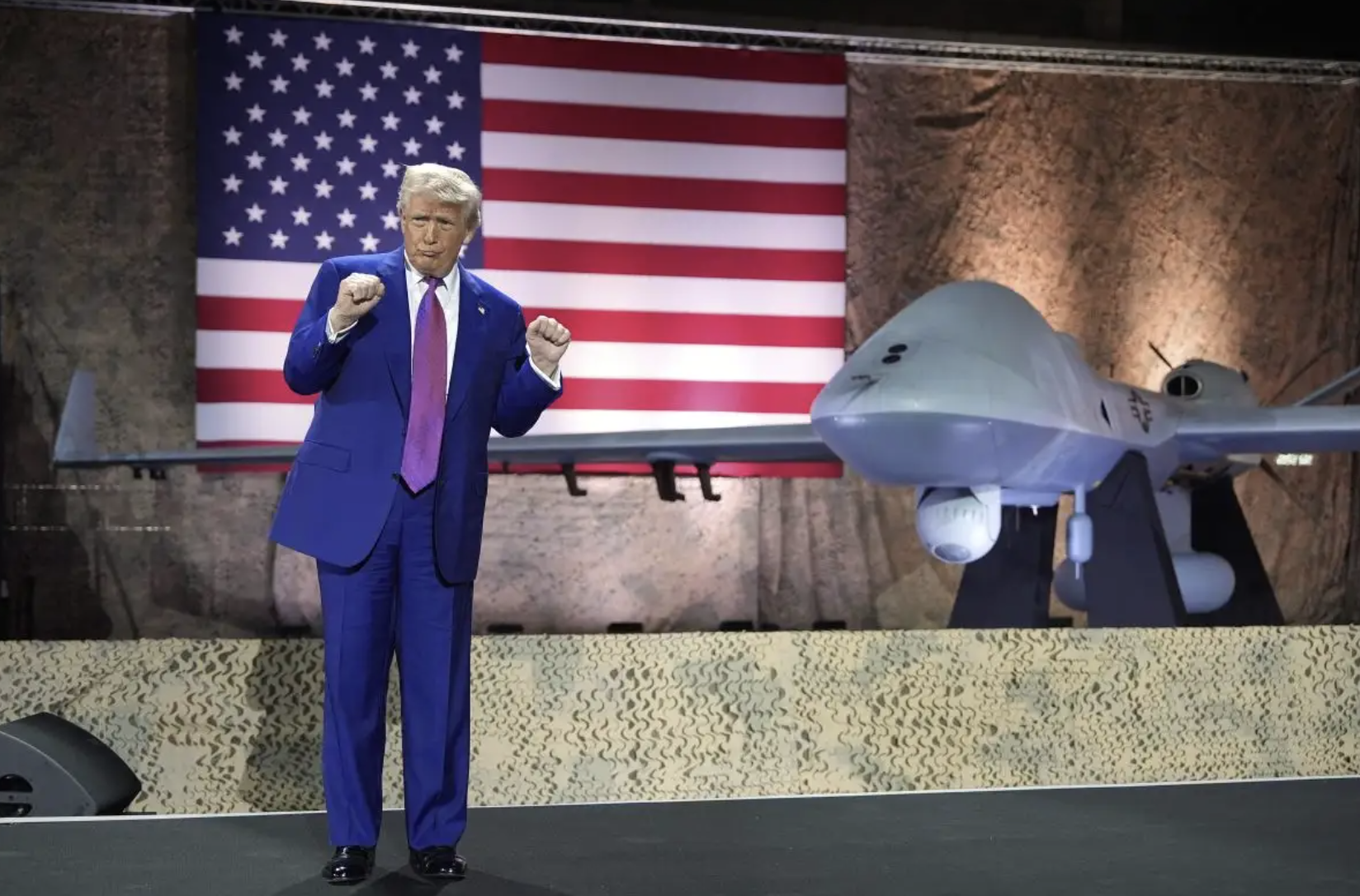
Two new federal actions are set to reshape the U.S. robotics and commercial drone markets, although they approach the issue from different directions.
In late July, the Federal Communications Commission added most foreign-produced mobile robots to its Covered List, limiting the ability of manufacturers to introduce new systems in the United States without a national security review. A little more than two weeks later, the White House announced tariffs of up to 100% on imported drones, docking stations, and certain components.
The measures are separate, but they reflect the same policy priorities: reducing dependence on foreign technology, limiting cybersecurity and data-security risks, and building domestic manufacturing capacity. They also raise similar practical questions for industrial companies that already rely on internationally sourced equipment.
New Foreign Robots Face FCC Restrictions
On July 28, the FCC added “foreign-produced advanced robotic devices” to its Covered List. Equipment on that list is generally ineligible to receive the FCC authorization required for new products to be imported or marketed in the United States.
The policy applies broadly to foreign-produced mobile robots that incorporate onboard sensing, communications and some level of autonomy. According to IEEE Spectrum’s reporting of the action, the definition generally covers communicating mobile robots weighing more than 2 kilograms, although there are exceptions, including systems that communicate at less than 200 kilobits per second.
Drones, connected vehicles, and medical devices are excluded from this particular action because they are addressed through other regulatory frameworks.
The action does not require companies to remove robots already operating in U.S. facilities. It primarily affects new devices that have not yet received FCC equipment authorization. That distinction may allow existing deployments and currently authorized products to continue, but it could significantly narrow the options available when companies need to upgrade or replace those systems.
The FCC said the restrictions respond to both cybersecurity and supply chain concerns. In its official notice, the agency said networked robotic systems could create vulnerabilities that allow outside parties to access operational data, conduct surveillance on users, or interfere with a robot’s physical operation.
Those concerns are particularly relevant in industrial environments, where mobile robots may inspect power plants, substations, manufacturing facilities, refineries, and other critical infrastructure. The same sensors that help a robot identify a gas leak, map an asset, or detect abnormal equipment conditions also collect detailed information about facility layouts and operations.
Although the policy is formally country-neutral, much of the underlying concern is focused on China. The Department of Defense’s supporting analysis referenced reported vulnerabilities in robots from Chinese manufacturer Unitree, among other examples. However, because the restriction applies to foreign production rather than a list of targeted countries or companies, manufacturers in allied nations are affected as well.
Foreign Manufacturers Have a Demanding Path Forward
Foreign robotics companies can seek conditional approval from the Department of Defense. Applicants must disclose information about ownership and supply chain risks and provide a time-bound plan to establish or expand U.S. manufacturing.
That process could offer a path into the U.S. market for companies willing to localize production and provide greater transparency into their technology. ANYbotics, the Switzerland-based manufacturer of industrial quadruped robots, told IEEE Spectrum that it intends to apply for conditional approval for future products.
Industry reactions have been mixed.
Brendan Schulman, vice president of policy at Boston Dynamics, described the action as a potential starting point for policies that could shape the growth of the U.S. robotics industry for decades. Gavin Kenneally, CEO of Ghost Robotics, argued that stronger cybersecurity requirements and a more level competitive environment would benefit both customers and manufacturers.
Others have warned that a broad policy could limit access to useful technology and disrupt the component relationships that American robotics companies themselves rely upon. China is not only a major producer of finished robots; it also supplies many of the motors, sensors, batteries, and other components incorporated into products assembled elsewhere.
That makes the definition of “domestic” more complicated than the location of the final assembly.
Brookings Institution fellow Kyle Chan has argued for a more targeted, continuously updated approach to risks associated with Chinese technology. A framework involving audits, disclosure requirements, licensing, and restrictions focused on sensitive sectors could reduce vulnerabilities without unnecessarily limiting access to technology or slowing domestic innovation, according to his July 2026 analysis.
Drone Tariffs Bring a More Immediate Cost Impact
While the robotics action focuses on FCC authorization for future products, the new drone tariffs could produce a much faster and more visible impact on equipment costs.
On August 13, President Donald Trump issued a proclamation under Section 232 of the Trade Expansion Act imposing additional tariffs on imported drones and specified components. The Commerce Department concluded that the volume and circumstances of UAS imports threatened to impair national security, citing both foreign supply chain dependence and the potential for drone software to transmit data to overseas manufacturers.
Under the proclamation:
Imported drones with a maximum takeoff weight above 25 kilograms face a 100% tariff
Drones that integrate thermal imagers face a 100% tariff regardless of weight
Drone docking stations and certain designated components also fall into the 100% category
Imported drones weighing 25 kilograms or less generally face a 25% tariff
Additional specified components will be subject to a 25% tariff beginning February 9, 2027
Most of the new tariffs take effect September 3, 2026, and are added on top of other applicable duties and charges.
Thermal Drones and Docks Put Industrial Programs in the 100% Tier
The 100% rate for thermal-equipped drones is especially significant for the energy, utility, and industrial sectors.
Thermal drones are widely used, and a small quadcopter carrying an integrated thermal camera can fall into the highest tariff category even if its weight is well below 25 kilograms.
Docking stations face the same 100% tariff, which could affect the economics of the drone-in-a-box programs that are becoming central to remote and automated inspection strategies.
The White House identified docks as particularly sensitive because they enable autonomous operations around critical infrastructure. For operators, however, they are also the foundation of scalable inspection programs. A sharp increase in their acquisition cost could slow deployments, change expected returns on investment, or lead companies to reconsider which locations receive permanent systems.
In a study of drone operators, more than 43 percent said their business could shutter if the covered list restrictions remain in place.
Alan Perlman, founder and CEO of UAV Coach, highlighted that tension in a LinkedIn post about the announcement. While supporting the goal of building a stronger American drone industry, he noted that drones are already used for public safety, construction mapping, infrastructure inspection, and agriculture—and that those activities are about to become more expensive.
Perlman recommended that operators inventory their fleets, document where their aircraft were manufactured, confirm their authorization status, and assess replacement and repair timelines. He also advised organizations that rely on targeted technologies to begin budgeting for higher acquisition costs and evaluating U.S.-made alternatives.
Onshoring Will Take More Than Final Assembly
The administration intends the tariffs to create demand and investment for U.S. manufacturing. The proclamation directs the Commerce Department to establish an onshoring program for companies building, refurbishing, or expanding domestic production facilities. Approved companies may receive relief from Section 232 tariffs on qualifying imports while those facilities are under construction.
The announcement produced an immediate positive response among investors. As Axios reported, shares of several American drone companies increased following the announcement, including Unusual Machines, Red Cat Holdings, Ondas, AeroVironment, and Kratos Defense & Security Solutions.
The longer-term manufacturing picture is more complicated. The White House itself acknowledged that most commercial and industrial drones—including many produced in the United States—incorporate critical foreign-made components.
Andrew Ashur, founder and CEO of U.S. drone and robotics manufacturer Lucid Bots, said in a LinkedIn discussion that the tariffs could force companies to rethink supply chains and create long-term opportunities for domestic manufacturing, even as they generate near-term challenges.
Comments on his post underscored how difficult that transition may be. SourceBridge commented that final assembly can move to the United States faster than the underlying component ecosystem. Others pointed to the need for stable specifications, quality documentation, repair data, and sufficient demand for suppliers to justify new capacity.
In other words, putting “Made in the USA” on the airframe will not, by itself, create a resilient American drone industry.
What Industrial Operators Should Watch Next
For companies deploying robots and drones, these actions make procurement decisions inseparable from regulatory status, cybersecurity, and supply chain transparency.
Operators should not assume their existing equipment will become unusable immediately. The FCC’s robot restriction primarily affects authorization for new products, while the tariffs apply to covered imports entering the country after their effective dates. Equipment already purchased and operating may continue to provide years of service.
The pressure will become more visible when organizations expand fleets, replace damaged aircraft, purchase updated robot models, or need specialized systems that have limited domestic equivalents. Service availability and spare parts could become just as important as the initial equipment price.
These policies may ultimately accelerate U.S. manufacturing and produce a more diverse, secure supply chain. In the near term, however, industrial users should prepare for higher costs, fewer equipment choices, and greater scrutiny of where products—and the components inside them—come from.
Playbook for Adapting to New Drone Tariffs and Robotics Restrictions
The latest federal actions affect drones and robots differently, but both point in the same direction: tighter scrutiny of foreign technology, higher costs for some imported systems and stronger pressure to build domestic supply chains. Here’s how industrial operators and technology providers can prepare.
1. Inventory Your Current Fleet and Pipeline
Start by understanding what you already own and what you expect to purchase next.
Action: Document each drone and mobile robot’s manufacturer, country of production, FCC authorization status, critical components, and intended service life.
Priority: Pay particular attention to thermal drones, docking stations, heavy-lift aircraft, and foreign-produced mobile robots planned for future deployment.
2. Recalculate the Business Case for Affected Drone Systems
The new tariffs will not affect every drone equally.
Action: Update acquisition and deployment budgets to reflect the additional 100% tariff on affected categories.
Take It Further: Revisit the ROI of thermal inspection, drone-in-a-box, and autonomous monitoring programs using the new equipment costs.
3. Audit the Entire Supply Chain
A U.S.-assembled product is not necessarily supported by a domestic supply chain.
Action: Ask vendors where components in their equipment originate.
Next Step: Identify single-source dependencies and determine which components would be hardest to replace.
4. Verify Regulatory Status Before Buying
On your next purchase, pricing is only one part of the new procurement equation.
Action: Confirm that new foreign-produced robots can receive the required FCC equipment authorization or have secured conditional approval.
Rule of Thumb: Don’t rely on a vendor’s general claim that a product is “compliant.” Request documentation for the specific model and configuration being purchased.
5. Get Ahead of Procurement Delays
Existing systems may continue operating, but their support ecosystems could change.
Action: Review replacement cycles, spare-parts inventories, software support, repair turnaround times, and planned fleet expansions.
Priority: Identify equipment whose failure would interrupt critical inspections or autonomous operations.
6. Monitor the Rules and Participate in the Process
Important implementation details are still developing.
Action: Monitor Commerce Department guidance on the drone onshoring program and any additional components added to the tariff schedule.
Opportunity: Submit comments and share real-world information about how proposed restrictions could affect public safety, infrastructure inspection, energy operations, and other critical applications.
