

Best of Summer: Top Industrial Digital Reality Stories
/Industrial digital reality is moving fast—we’re seeing everything from next-gen digital twins to enterprise-scale ecosystems and AI transformations delivering measurable ROI. This summer, three stories stood out as must-reads for anyone watching the convergence of data, immersive tech, and AI in industrial settings.
Albemarle’s AI Transformation: Escaping Pilot Purgatory
At AVEVA World, Jonathan Alexander explained how Albemarle has delivered $150 million in annual improvements by scaling AI beyond pilots. Instead of chasing shiny tools, Albemarle built a strong data foundation, contextualized 70,000+ instruments, and trained 1,200+ machine learning models. Alexander’s 10 lessons—from turning dashboards into “action boards” to embedding AI into daily workflows—show how culture, change management, and persistence matter as much as algorithms. His message was clear: AI should be a teammate that empowers people to solve problems faster and smarter.
Read the full session recap >>>
ExxonMobil’s Digital Reality Ecosystem: Scaling Beyond the Twin
ExxonMobil’s Kyle Daughtry and Athicha “M” Dhanormchitphong shared how the company is building a Digital Reality Ecosystem (DRE) that unifies spatial, visual, and operational data. Instead of locking into one software platform, they’re harmonizing data across layers—from drone imagery to CAD models to operational metadata.
The four pillars of DRE—capture, store, deliver, and consume—create a modular framework that enables use cases like immersive training, anomaly detection, and turnaround planning at scale. Their industry-wide push, including the Open Asset Digital Twin Group, underscores a critical message: collaboration and data ownership are the keys to scalable transformation.
Read the full session recap >>>
From Intelligent to Generative: The Next Era of Digital Twins
From Automation World
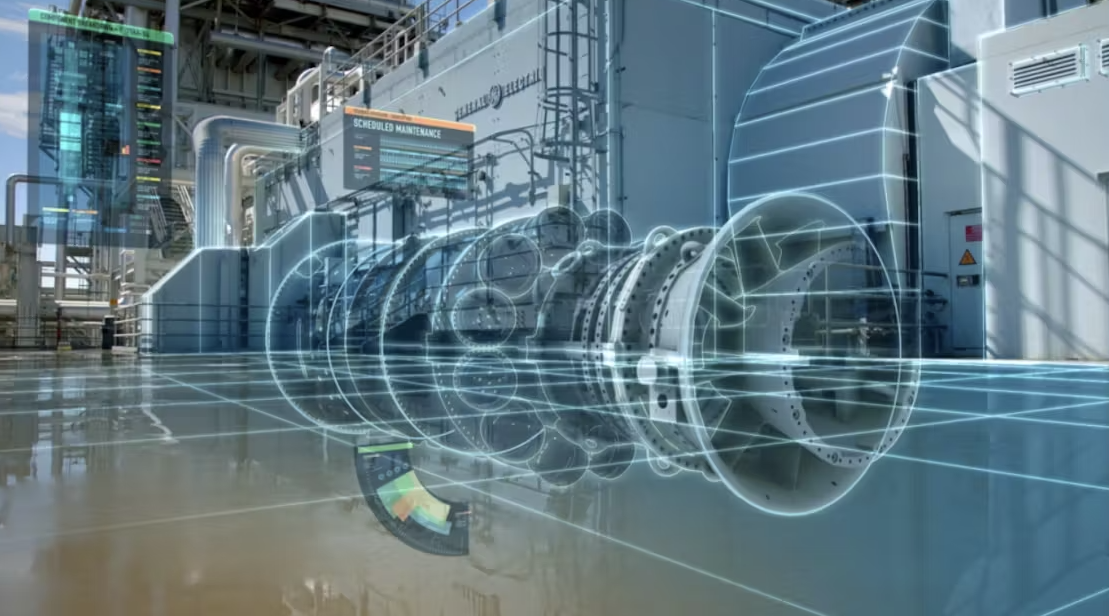
At Industrial IMMERSIVE 2025, Dan Isaacs of the Digital Twin Consortium explored how digital twins are evolving from passive models into generative, autonomous systems. Intelligent digital twins already optimize operations, but generative twins—powered by multimodal AI and autonomous agents—take it further, reasoning, planning, and acting with minimal human intervention.
Case studies highlighted everything from reduced automotive testing cycles to NASA’s infrastructure monitoring. Isaacs’ main takeaway: digital twins are no longer just mirrors of reality, but active decision-makers and collaborators in shaping it.
Read the full session recap >>>
A Reality That’s Becoming More Digital (and More Human)
This summer’s stories prove that industrial digital reality isn’t just about the tech. Whether it’s generative digital twins taking on decision-making, ExxonMobil building a flexible data-first ecosystem, or Albemarle scaling AI by putting people first, the theme is consistent: success lies in integration, collaboration, and culture.
