

Seeing the Invisible: How the City of Troy Stops Outages Before They Start
/
From sUas news
If you work in utilities, you know that aging equipment is a ticking clock. Most of the time, we rely on thermal cameras to find "hot spots." It’s a good system, but it has a big flaw: by the time something is hot enough for a thermal camera to see it, the damage is often already done.
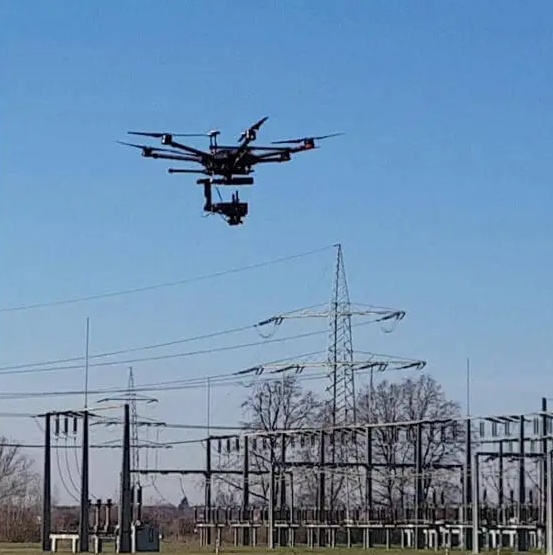
The City of Troy decided they needed a better way to look at their infrastructure and built a highly structured and forward leaning drone program, including centralized data management. They teamed up with OFIL to use a tech called DayCor. It’s a specialized camera that sees ultraviolet (UV) light. Here is how they’re using it to find "invisible" sparks before they cause a fire or a blackout. Combined with Gridnostic data management they have a central platform for analytics at scale.
1. The problem with "Invisible" sparks
High-voltage equipment sometimes leaks electricity into the air. This is called "corona discharge." You can’t see it with your eyes, and you usually can’t see it with a thermal camera because it doesn't always create a lot of heat right away.
But corona is a huge red flag. It means an insulator is failing, a connection is loose, or there’s a design flaw. If you leave it alone, it eats away at the equipment until something eventually snaps or shorts out.
2. Seeing through the sun
In the past, you could only see these UV sparks at night because the sun’s light would wash them out. That isn't very helpful for a maintenance crew working a day shift.
The City of Troy used OFIL’s "solar blind" technology. These cameras filter out the sun’s UV rays and only show the sparks coming from the power lines. It lets the team do inspections in the middle of a bright afternoon and see exactly where the electricity is leaking.
3. Finding what Thermal misses
Thermal cameras are great for finding resistance—like a bad fuse that’s running hot. But corona discharge happens because of high voltage, not just high current.
During their inspections, the City of Troy found several spots where the thermal camera showed everything was normal, but the UV camera showed a major problem. By catching these issues early, they could schedule a fix during regular hours instead of dealing with an emergency repair in the middle of a storm.
4. Streamlining asset management
This Gridnostic tech approach does more than just find sparks; it cleans up the whole maintenance process. Instead of sending crews out on a "fishing trip" to find a mysterious fault, the utility has a clear map of exactly where to go.
It takes the chaos out of the morning briefing. You aren't reacting to fires or blackouts at 2 AM. Instead, you can group repairs together by location and send the right team with the right parts on a Tuesday morning. It makes the work predictable and keeps your budget in check by cutting down on expensive emergency overtime.
5. Building a better record for the long haul
This is about getting a full view of your grid health. By recording these UV events, the utility can track how their assets are aging over time.
If you see corona starting on the same type of hardware across the whole city, you know you have a systemic problem. You can plan a full replacement project for next year’s budget before a string of failures hits the grid. It turns "emergency response" into a planned, calm operation that keeps the lights on for everyone.
The EDR News Takeaway: If you’re only looking for heat, you’re only seeing half the problem. The City of Troy’s work shows that UV imaging is a "must-have" for any modern utility. Don't wait for the sparks to turn into a fire. Start looking for the invisible signs of failure today.
Want to hear the latest utility case studies with drones, actionable data and AI? Be sure to join us at the EDR Summit in Houston.
