

The Data Bridge: How Modern Utilities are Breaking Down Silos
/
From Skydio
If your drone program is still just a person in a truck with a controller and a dream, you're already behind the curve. Utilities are no longer asking if drones work; they are asking how to make that drone data work for everyone in the company.
In a recent session moderated by Christina Park (Skydio), utility leaders Craig Stenberg (Southern California Edison), Anirudh "AP" Paduru (BGE/Exelon), and Mike MacMillan (Nova Scotia Power) sat down to discuss "cross-functional data." It sounds like a corporate phrase, but in the field, it’s the difference between a grid that stays up and one that fails. Here is how these industry leaders are changing their playbook.
The "Silo" Tax
Most utility drone programs started as small experiments in one department. Maybe it was a transmission team looking at insulators or a vegetation team checking trees. As AP Paduru from BGE/Exelon pointed out, the problem is that these teams rarely talk to each other.
When data stays in a silo, the company pays a "tax." You end up flying the same line twice, or worse, one team finds a fault that the other team never hears about. The goal now is to capture data once and use it everywhere.
Reducing the "Time to Data"
In a storm event or an emergency, data is a perishable good. If it takes three days for a pilot to get home, upload photos, and for an analyst to find a broken pole, the data is already too old.
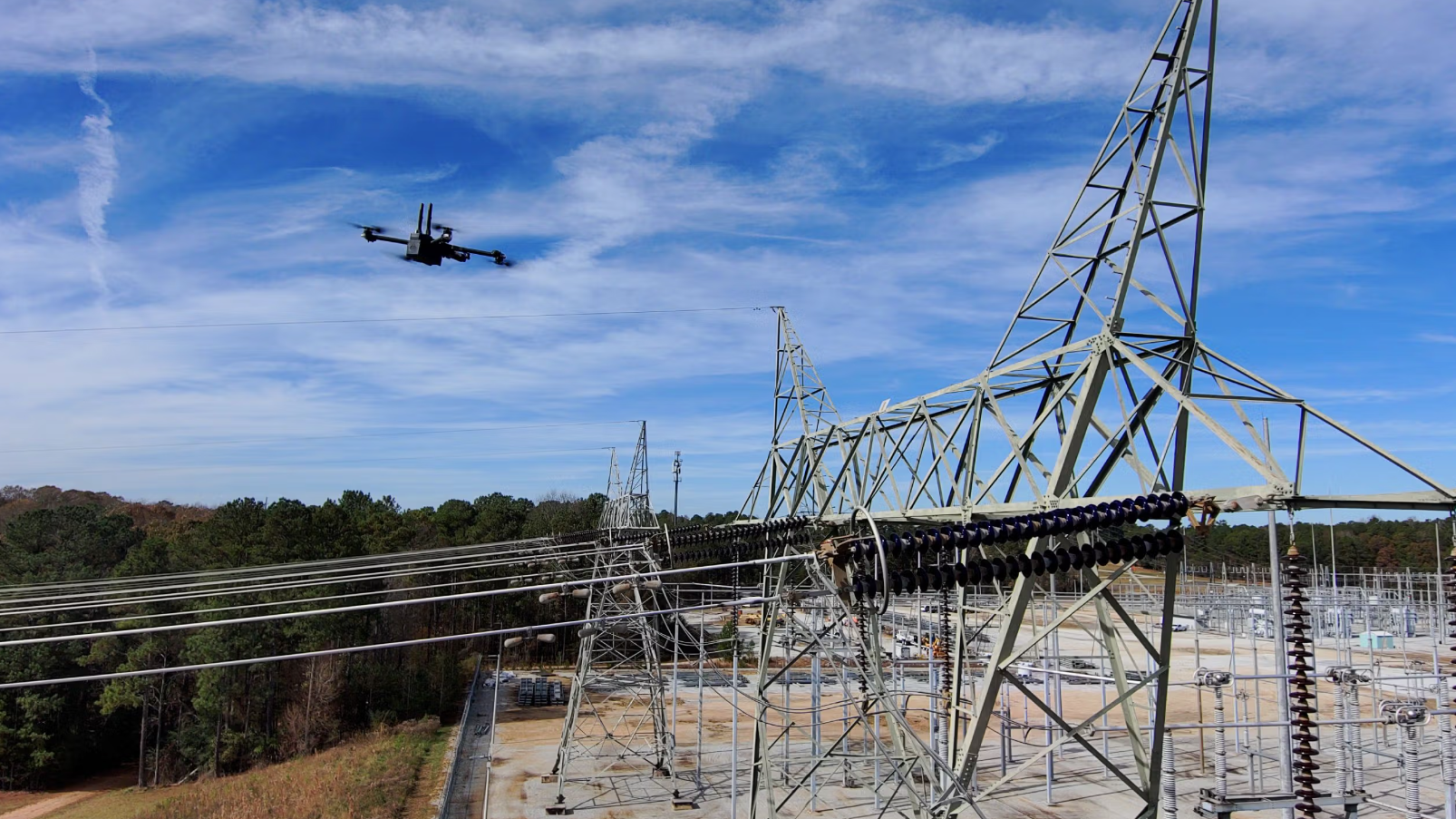
By using autonomous drones like the Skydio X10, Christina Park explained that utilities are moving toward real-time results. The drone handles the complex flight, and the data is uploaded and sorted almost instantly. This allows a supervisor in a central office to see exactly what’s happening in the field as it happens.
From Pictures to Actions
A photo of a transformer is nice, but a work order is better. Mike MacMillan of Nova Scotia Power emphasized that the real win happens when the drone data plugs directly into the asset management system.
When the software can flag a defect and automatically create a ticket for the repair crew, you’ve removed the biggest bottleneck in the process: human data entry. This "digital thread" connects the drone in the air to the wrench in the field.
The 24/7 Site Presence
We’re also seeing a shift toward "Drone in a Box" systems for substations and high-value sites. Craig Stenberg from Southern California Edison highlighted how remote operations are changing the math for utility inspections.
Instead of waiting for a crew to drive to a remote location, the drone lives there. This provides a cross-functional benefit for both security and maintenance. The security team uses it to check for intruders, while the engineering team uses the same flights to monitor equipment health.
Building a Data-First Culture
Technology is only half the battle. The other half is getting people to trust the data. This requires a shift in culture.
The experts noted that the most successful programs are those that involve the end-users early. If the lineworkers and the engineers help design the data reports, they are much more likely to use them. It turns the drone from a "management tool" into a genuine help for the people doing the hard work.
The EDR News Takeaway: Stop building "drone programs" and start building "data pipelines." As leaders from SCE, BGE, and Nova Scotia Power demonstrated, the utilities that are winning are the ones that treat their aerial data as a shared resource.
Don't let your data get stuck in a folder or on a flash drive—make sure it flows to every corner of your operation.
